
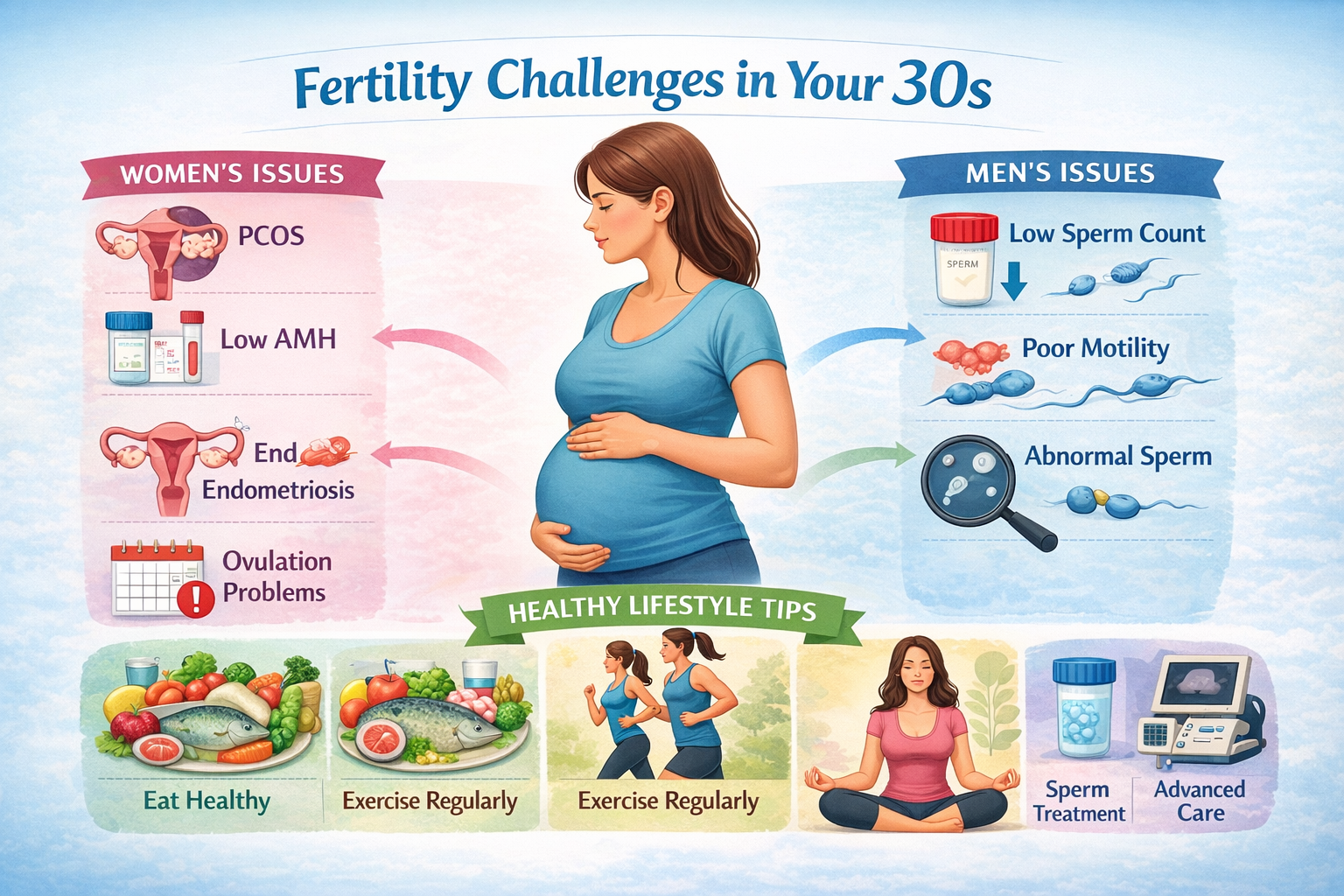
Trying to conceive can be an exciting journey, but for many couples in their 30s, it can also bring stress and frustration. If you find yourself asking, “why am I not conceiving in my 30s?” or “Is something wrong with my fertility?”, you are not alone. Fertility challenges are increasingly common in modern urban lifestyles, and understanding the causes can help you take timely action.
Why Fertility Changes in Your 30s
Women’s fertility naturally declines after the age of 30. The number and quality of eggs gradually decrease, making conception more challenging. While men can remain fertile longer, age can affect sperm quality, mobility, and count. Lifestyle factors, stress, and underlying medical conditions can also play a significant role.
Many couples in their 30s experience delayed conception even when both partners are healthy. Recognizing the potential issues early and consulting a fertility specialist can significantly improve outcomes.
Common Fertility Problems in Women
1. PCOS (Polycystic Ovary Syndrome)
PCOS is one of the leading causes of infertility in women. Hormonal imbalances interfere with ovulation, making it difficult to conceive naturally. Symptoms may include irregular periods, weight gain, acne, and excess hair growth. Early diagnosis and proper treatment can improve fertility significantly, helping women overcome common causes of infertility in women after 30.
2. Low AMH Levels
Low AMH levels can indicate reduced fertility potential. Women with low AMH may still conceive with appropriate medical interventions such as ovulation induction or IVF. Testing AMH levels is a key step in understanding fertility challenges in your 30s.
3. Endometriosis
Endometriosis occurs when the tissue that normally lines the uterus grows outside it, causing inflammation, scarring, and sometimes blocked fallopian tubes. This condition can lead to pain and reduced fertility but can be managed effectively with modern treatments.
4. Ovulation Issues
Irregular or absent ovulation is a common cause of delayed conception. Hormonal imbalances, stress, or certain medical conditions can affect ovulation. Treatments such as ovulation induction or lifestyle adjustments can help restore regular cycles.
Common Fertility Problems in Men
Male fertility issues contribute to nearly half of all infertility cases. Common problems include:
-
Low sperm count (Oligospermia)
-
Poor sperm motility (slow-moving sperm)
-
Abnormal sperm morphology (shape and structure issues)
Factors such as stress, smoking, excessive alcohol, obesity, and certain medical conditions can affect sperm quality. Simple lifestyle changes and medical treatments can improve fertility outcomes, including treatments for low sperm count and infertility.
Lifestyle Factors Affecting Fertility
Even healthy couples may face difficulties conceiving due to lifestyle factors. Common contributors include:
-
Stress and anxiety – High stress can disrupt hormone balance and ovulation.
-
Poor diet – Lack of essential nutrients affects reproductive health.
-
Excessive caffeine or alcohol – Can reduce fertility in both men and women.
-
Weight fluctuations – Both overweight and underweight individuals may experience fertility challenges.
Adopting a balanced diet, regular exercise, and stress-reducing practices can help couples improve fertility naturally in 30s.
When to Consult a Fertility Specialist
If you are under 35 and have been trying to conceive for over a year, or over 35 and trying for six months without success, it’s time to consult a fertility specialist. Early evaluation can identify hidden fertility issues, whether in men or women, and provide effective treatment options.
At Dr. Ankita’s Fertility Center, led by Dr. Ankita, we offer comprehensive fertility evaluations and personalized treatment plans, including ovulation induction, IUI, IVF, and advanced reproductive technologies. Our goal is to support couples in achieving their dream of parenthood with care, expertise, and compassion. Choosing the best fertility clinic in Navi Mumbai ensures you get expert guidance at every step.
Final Thoughts
Fertility challenges in your 30s are more common than many realize, but they are often manageable with timely intervention. Understanding potential problems and seeking professional guidance early can increase your chances of conceiving naturally or with assistance.
Remember, you are not alone on this journey. With the right support, knowledge, and medical care, the path to parenthood is entirely achievable.