
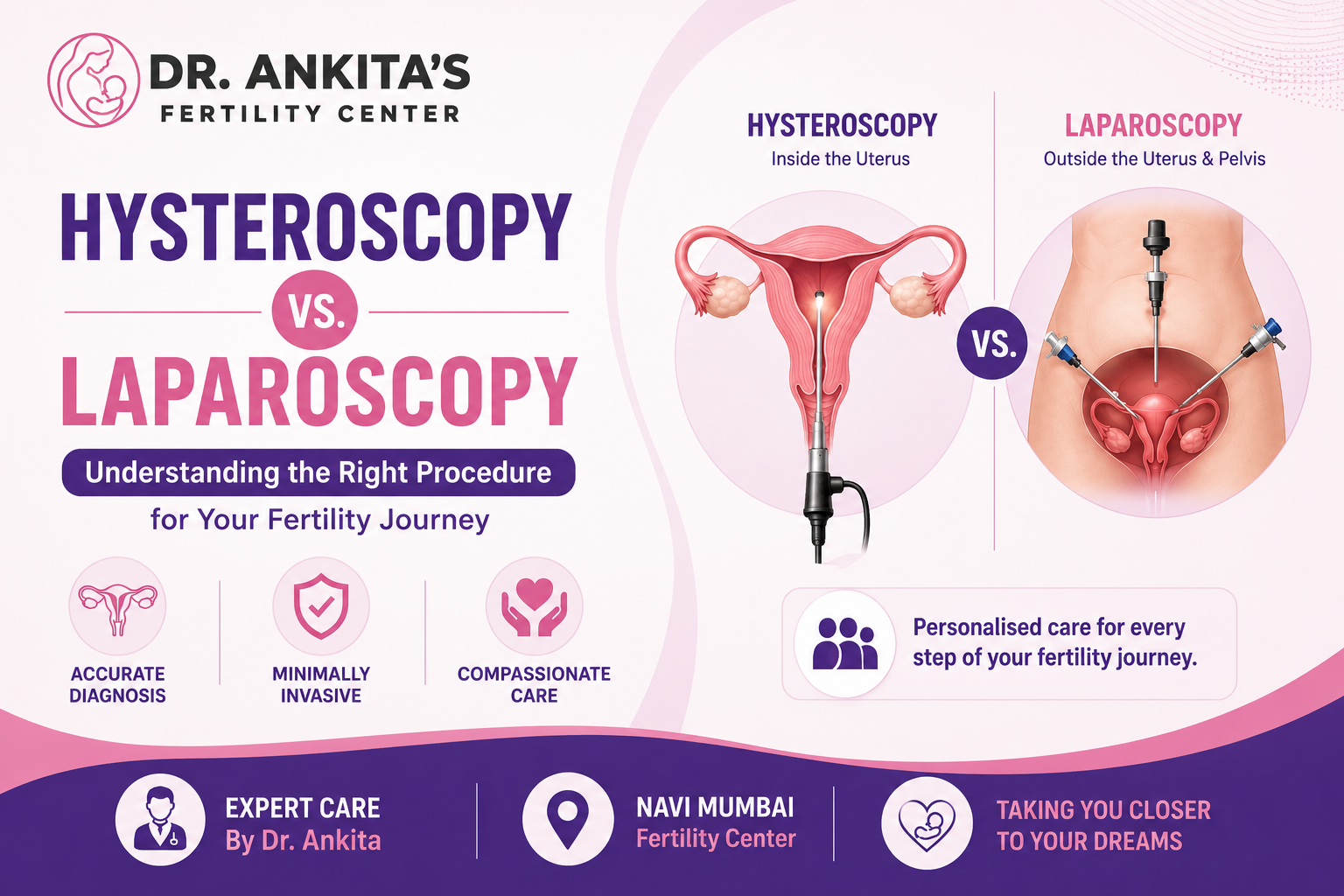
Receiving a recommendation for a minimally invasive gynaecological procedure can feel overwhelming especially when two options are placed in front of you. Hysteroscopy and laparoscopy are both powerful diagnostic and treatment tools, yet they serve very distinct purposes. Women considering Hysteroscopy Surgery in Navi Mumbai often wonder how it compares to laparoscopy and which one their situation truly calls for. This guide breaks it down clearly.
What Exactly Is Hysteroscopy?
Imagine being able to examine the inside of your uterus without a single surgical cut. That is precisely what hysteroscopy offers. A pencil-thin instrument carrying a micro-camera travels through the vaginal passage and cervix, projecting a live view of the uterine interior onto a screen.
This approach is invaluable for uncovering structural concerns that standard ultrasounds frequently miss growths on the uterine lining, cavity-based fibroids, bands of scar tissue, or an abnormal wall dividing the uterus. Women at Dr. Ankita’s Fertility Center who struggle with unexplained conception difficulties or recurring pregnancy loss often find their answers through this single targeted procedure.
What Exactly Is Laparoscopy?
Laparoscopy operates from a completely different vantage point. Rather than entering through the reproductive passage, a micro-camera is guided into the abdomen through a small incision near the navel. This gives the surgeon a direct view of the outer uterine surface, both fallopian tubes, the ovaries, and the broader pelvic region.
Laparoscopy Surgery in Navi Mumbai is the preferred investigative tool when symptoms point toward external reproductive concerns — deeply embedded endometrial tissue, tube blockages, fluid-filled ovarian cysts, or persistent abdominal discomfort that standard imaging cannot adequately explain.
Hysteroscopy vs. Laparoscopy: Major Differences
| Feature | Hysteroscopy | Laparoscopy |
| Views | Inside uterus | Outside uterus & pelvis |
| Entry | Through vagina/cervix | Small abdominal incision |
| Best For | Polyps, fibroids, adhesions | Endometriosis, cysts |
| Recovery | 1–2 days | 3–5 days |
| Anesthesia | Local/general | General |
Situations Where Hysteroscopy Is the Answer
A fertility specialist will typically consider hysteroscopy when a patient presents with:
- Bleeding that is abnormally heavy or occurs between menstrual cycles
- Growths such as polyps or cavity fibroids identified or suspected in scans
- A history of two or more pregnancy losses without an established cause
- Multiple unsuccessful IVF attempts despite transferring good quality embryos
- Structural irregularities within the uterus detected through imaging
- Suspected tissue adhesions forming inside the uterine cavity
Situations Where Laparoscopy Is the Answer
When the reproductive issue is believed to exist beyond the uterine walls, laparoscopy takes precedence. It is typically advised for women dealing with:
- Debilitating period pain or chronic lower abdominal discomfort
- Endometriosis that has not been formally confirmed
- Suspected damage or obstruction in one or both fallopian tubes
- Ovarian cysts that need visual confirmation and possible treatment
- Persistent fertility challenges even after the uterus has been cleared as a concern
Performing Both Procedures in One Session
Many fertility specialists recommend combining both procedures when a thorough reproductive evaluation is needed. Laparoscopy Surgery in Navi Mumbai conducted simultaneously with hysteroscopy provides a complete internal and external assessment of the female reproductive system under a single round of anesthesia, in one appointment, with one recovery period.
Dr. Ankita at her Navi Mumbai Fertility Center takes a highly individualised approach, carefully weighing each patient’s medical background, symptom pattern, and diagnostic findings before determining the most appropriate surgical plan.
Fibroids: Which Procedure Removes Them?
Fibroid location is the deciding factor here:
- Cavity fibroids growing within the uterine interior are removed through hysteroscopic myomectomy with no external cuts
- Wall-based or outer fibroids attached to the uterine muscle or surface are addressed through Laparoscopy Surgery in Navi Mumbai
Selecting the wrong procedure for the wrong fibroid type leads to incomplete treatment. Accurate location-based diagnosis is non-negotiable before proceeding.
Frequently Asked Questions
Is hysteroscopy uncomfortable for patients?
The procedure is conducted under anesthesia, so discomfort during the process itself is minimal. Post-procedure, some patients notice light cramping or minor spotting that clears up naturally within one to two days.
What is the typical laparoscopy recovery period?
Routine diagnostic laparoscopy patients are generally back to their normal schedule within four to five days. Procedures involving more complex treatment may require additional rest spanning one to two weeks.
How does hysteroscopy contribute to better IVF results?
A uterus free of structural abnormalities offers a far more receptive environment for embryo implantation. By detecting and resolving issues like adhesions, polyps, or a septum beforehand, hysteroscopy can meaningfully raise IVF success rates.
Is one procedure medically safer than the other?
Both carry an excellent safety record under skilled surgical care. Because hysteroscopy requires no abdominal entry point, it naturally involves a lower procedural risk. Individual health factors ultimately guide which option is most suitable.
Is it possible to have both procedures performed together?
Yes, and this combination is frequently performed. A joint session eliminates the need for repeat anesthesia, reduces overall procedural costs, and delivers a far more complete picture of reproductive health in a single visit.
Final Thoughts
The decision between hysteroscopy and laparoscopy ultimately comes down to where your specific condition originates. If an internal uterine issue is driving your symptoms, Hysteroscopy Surgery in Navi Mumbai is the focused solution you need. If pelvic structures outside the uterus are involved, laparoscopy takes the lead. Dr. Ankita and her skilled team at the Fertility Center approach every case with clinical precision and genuine compassion ensuring your treatment plan is built on accurate diagnosis and personalised care.
The right procedure at the right time can be the turning point in your journey toward parenthood.